



Learning Korean Through Context-Based AR Games for Non-Korean Speakers
WHY THIS MATTERS
MORE WAYS TO EXPLORE
ROLE
UX Designer
User Research
UIUX Design
Character Design
3D Modeling
Prototyping
TEAM
UX Designer (Me!) UX Designer
DURATION
Mar 2021 - Nov 2021
CHALLENGE
Lack of diversity in Korean language education systems
Hangeul is the only writing system with documented origins (created 1443), yet Korean language education has only a 60-year history. As Korean culture spreads globally among younger generations, demand for effective content is rising.
Current Hangeul education relies heavily on rote memorization, but Gen Z learners who value experiential learning need more engaging approaches.
RESEARCH
How can we encourage Korean learners to actively engage in learning?
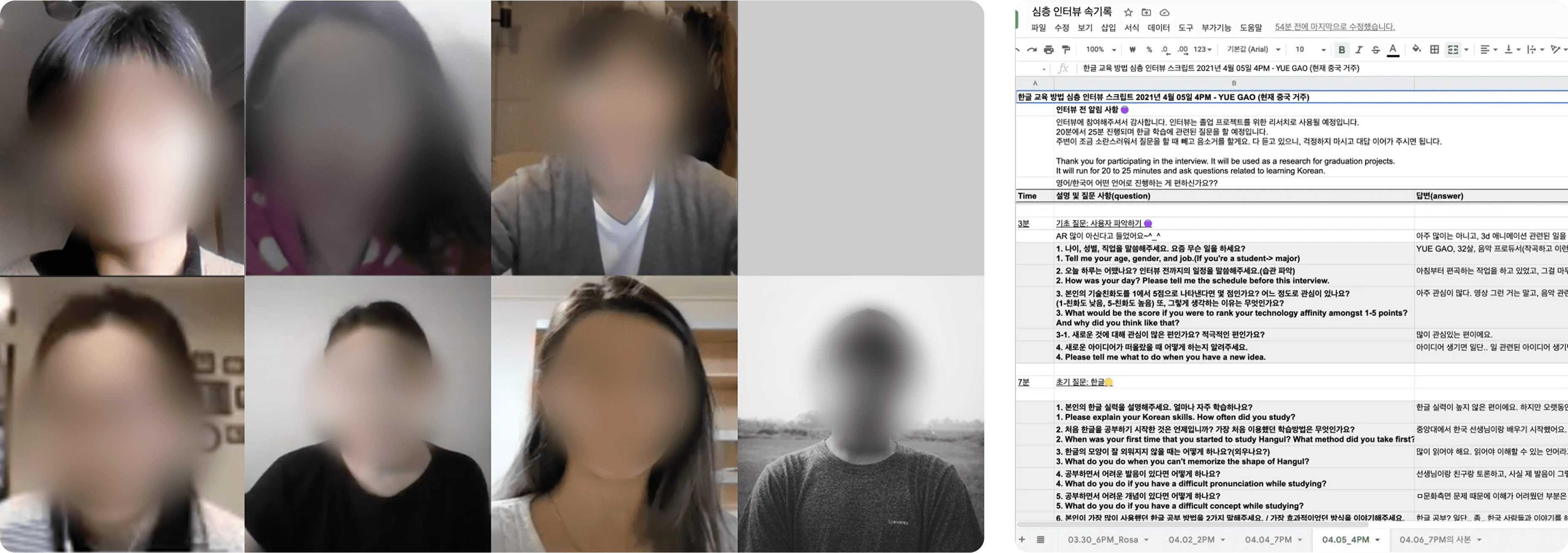
During the COVID-19 pandemic, we surveyed Korean learners at various levels through:
Online survey (n=58)
Virtual in-depth interviews (n=7)
In-person interviews with Gen-Z learners at Gyeongbokgung Palace (n=24)
Research Goals:
First impressions of Hangeul
Differences from other languages
Preferred learning media
Mobile learning challenges
Concentration difficulties
Most difficult aspects of Hangeul
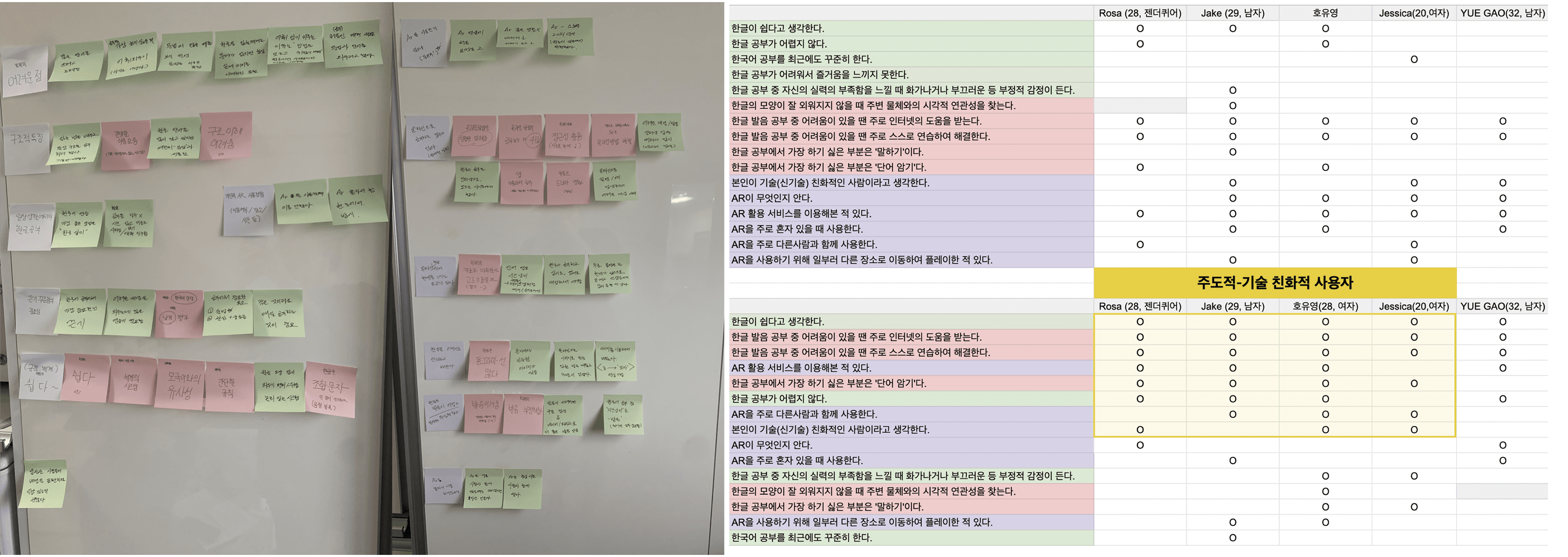
We organized all research results into an affinity diagram and identified three insights:
Key Insight

Pressure of Studying
Learners typically associate Korean learning with sedentary, screen-based study.

Boring Memorization
Learners tend to memorize characters without understanding their principles of its creation and lost interest.

Unique Shapes
Learners were particularly interested in the visual shapes of Hangul, which often resemble familiar real-world forms such as windows.
Research Question
How might we create engaging learning experiences that help learners naturally understand and memorize Hangeul's systematic principles?
INFORMATION ARCHITECTURE
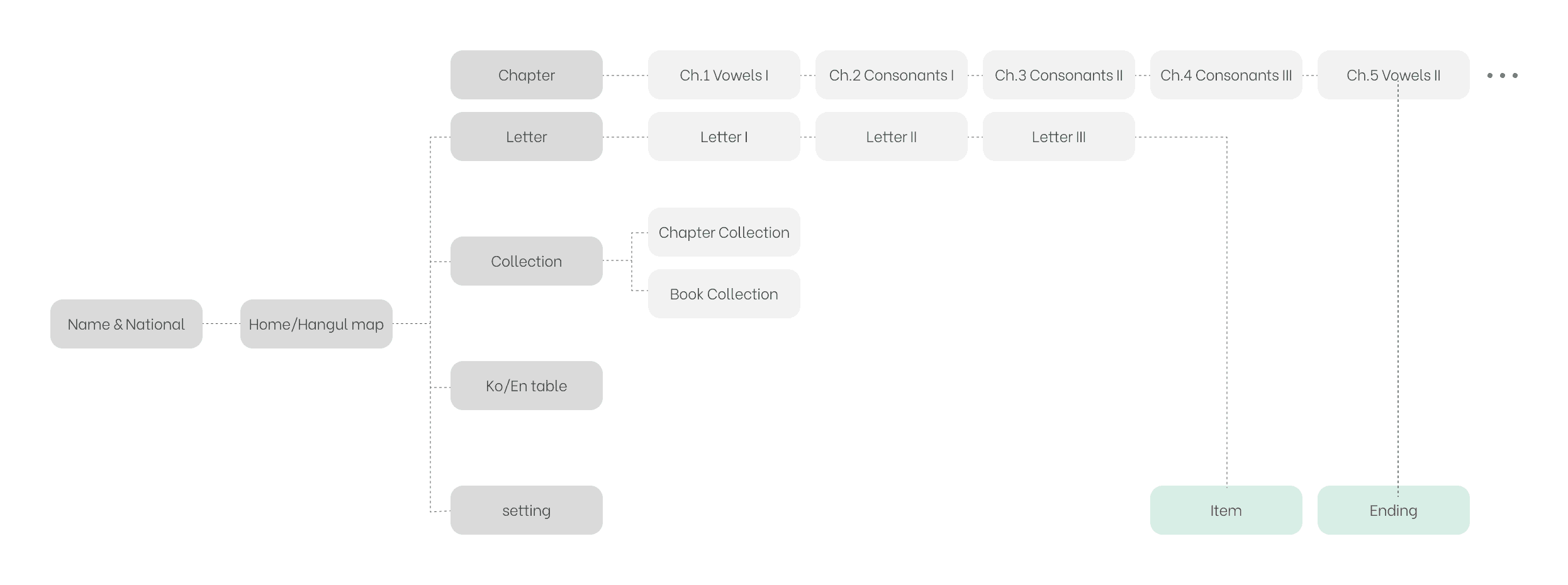
To ensure a fun and intuitive learning experience
We designed KoLing with:
One feature per page for clarity
Simple, guided AR interactions
Location-based storytelling
SOLUTION
Learning Hangul Through Spatial AR Storytelling
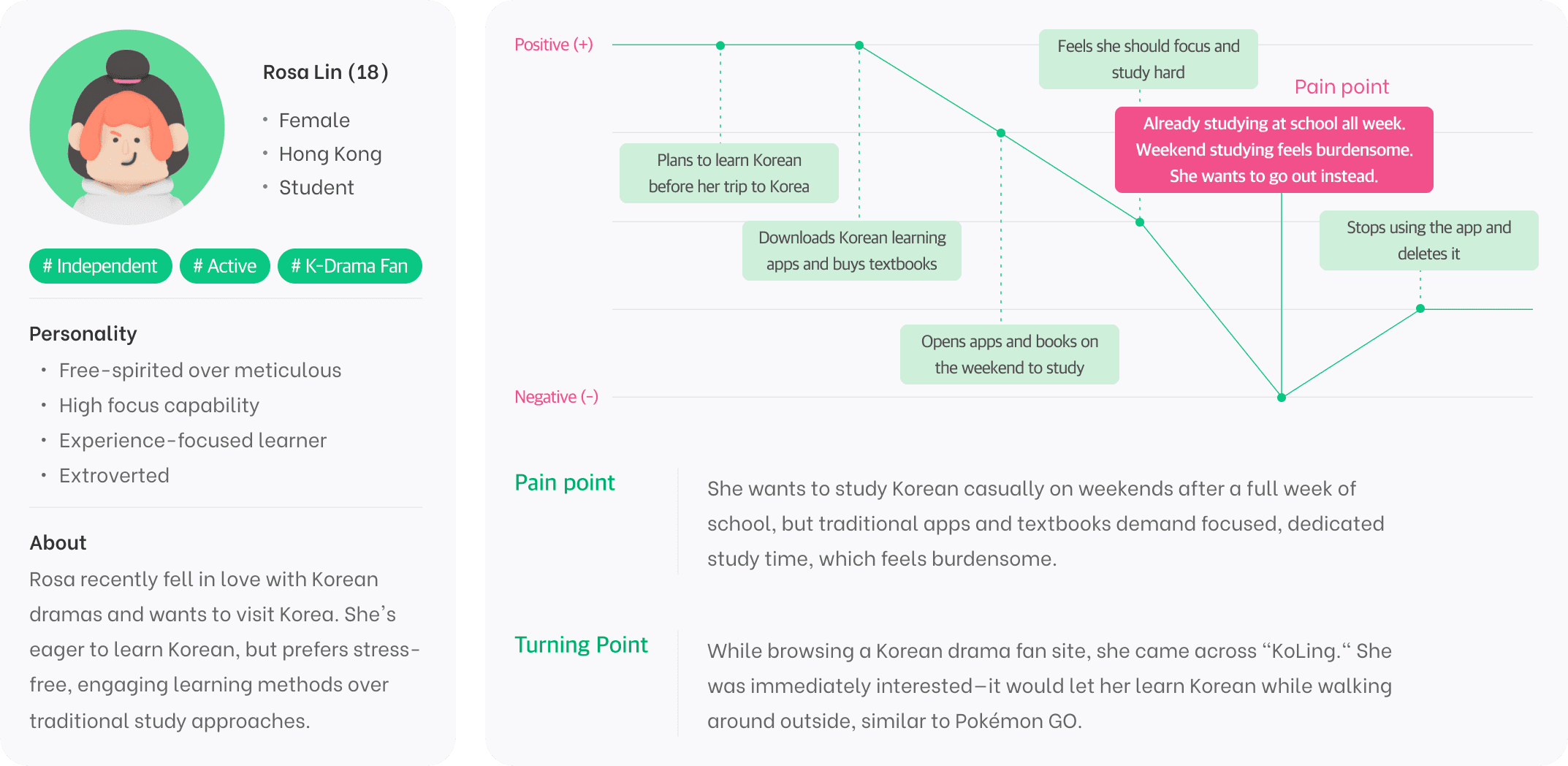
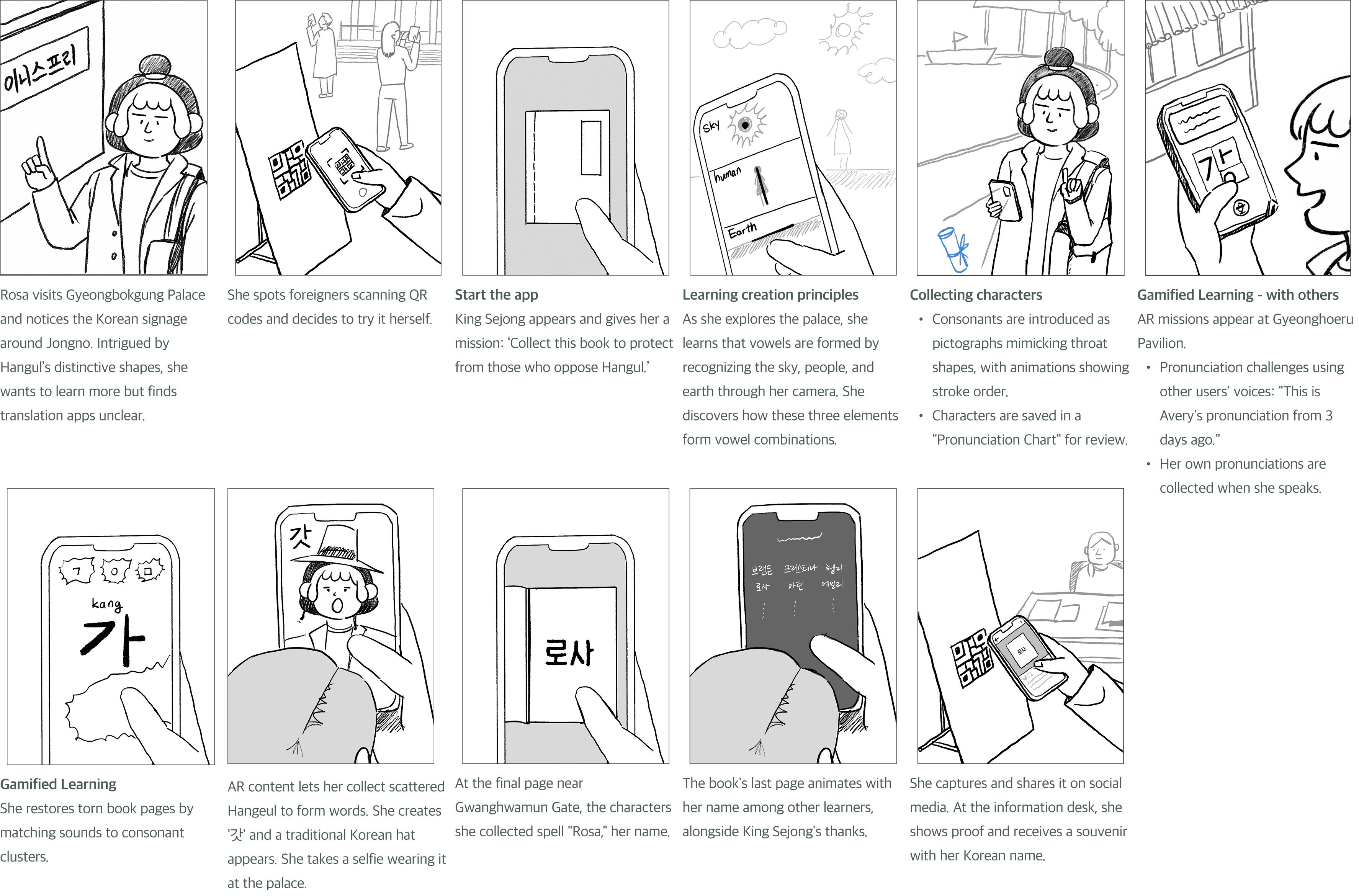
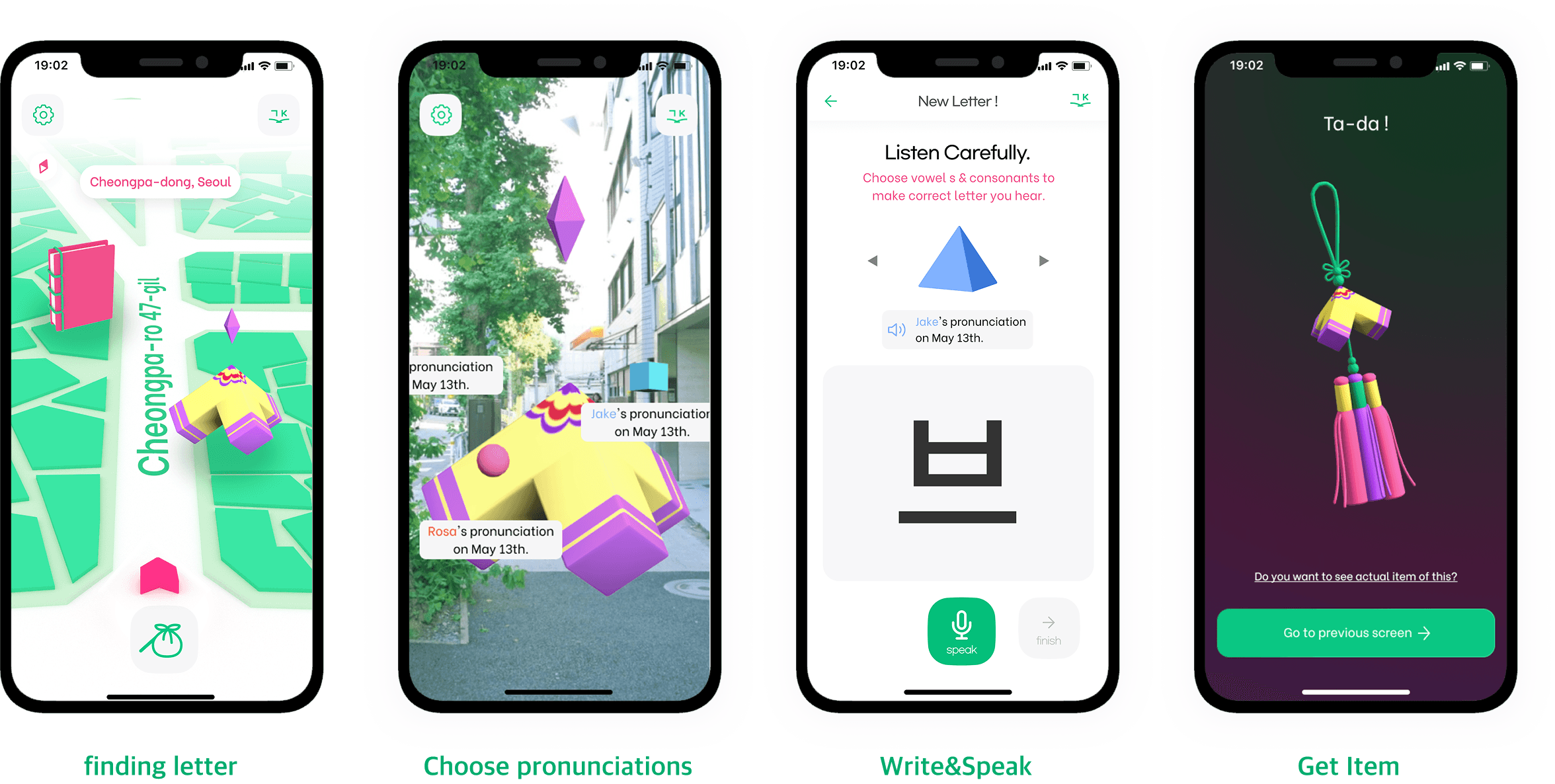
We designed an AR learning app, KoLing. In KoLing, King Sejong, the creator of Hangul, needs help recovering scattered books. Learners explore the map to find these books, then learn Hangul through games to restore and protect them.
King Sejong
"The Korean books lie scattered everywhere.
Would you find them for me?"

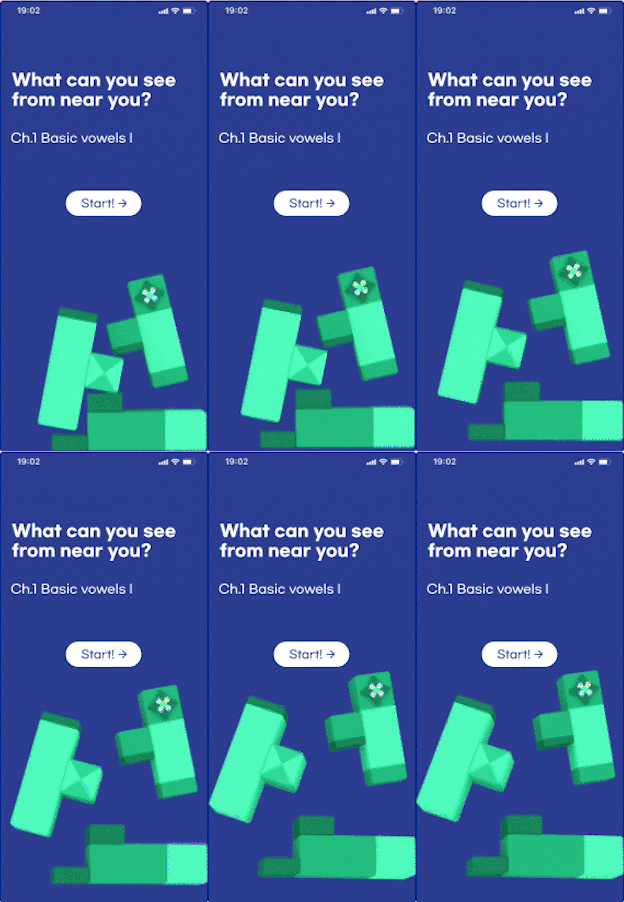
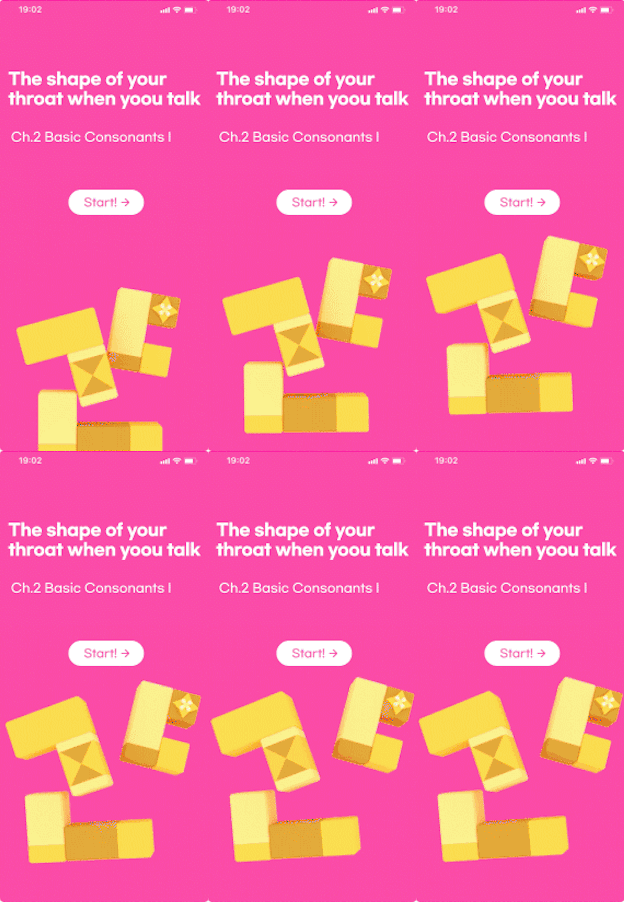
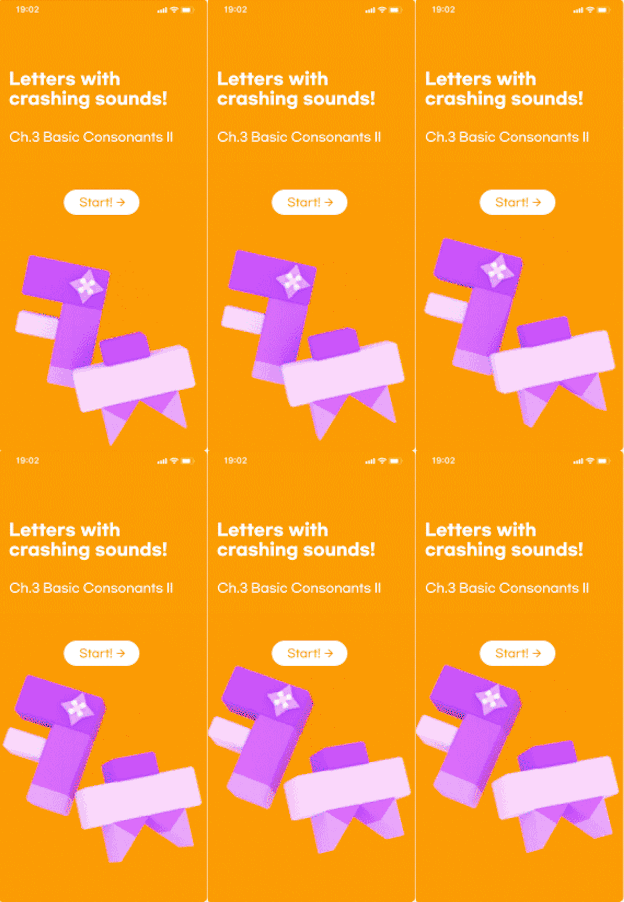
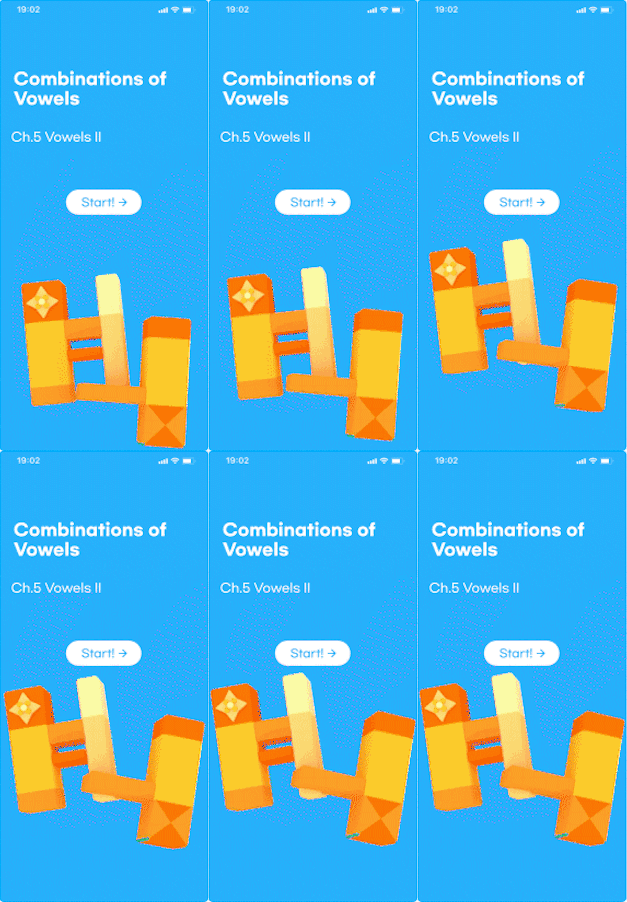
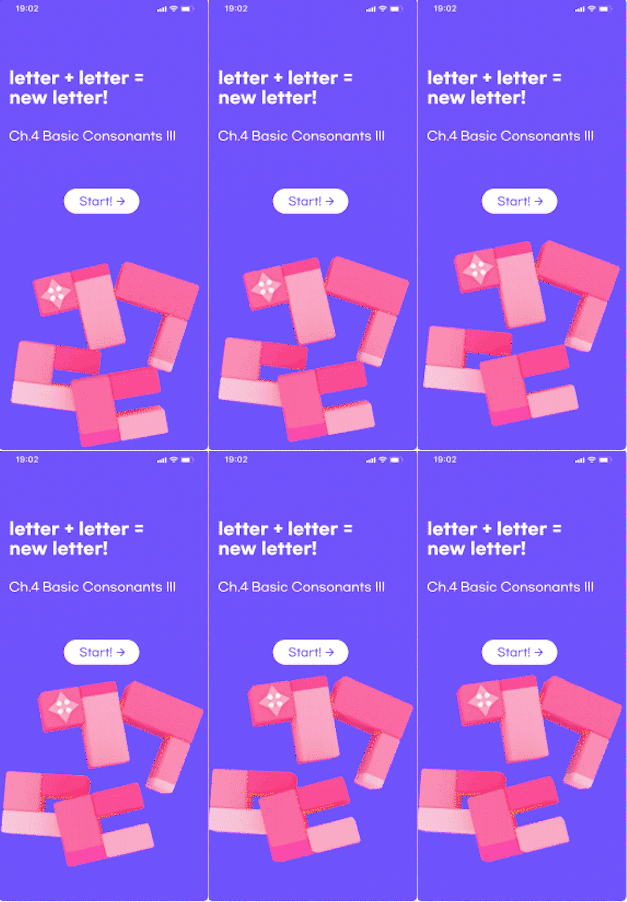
* I designed all 3D objects and animated them using C4D.
DESIGN
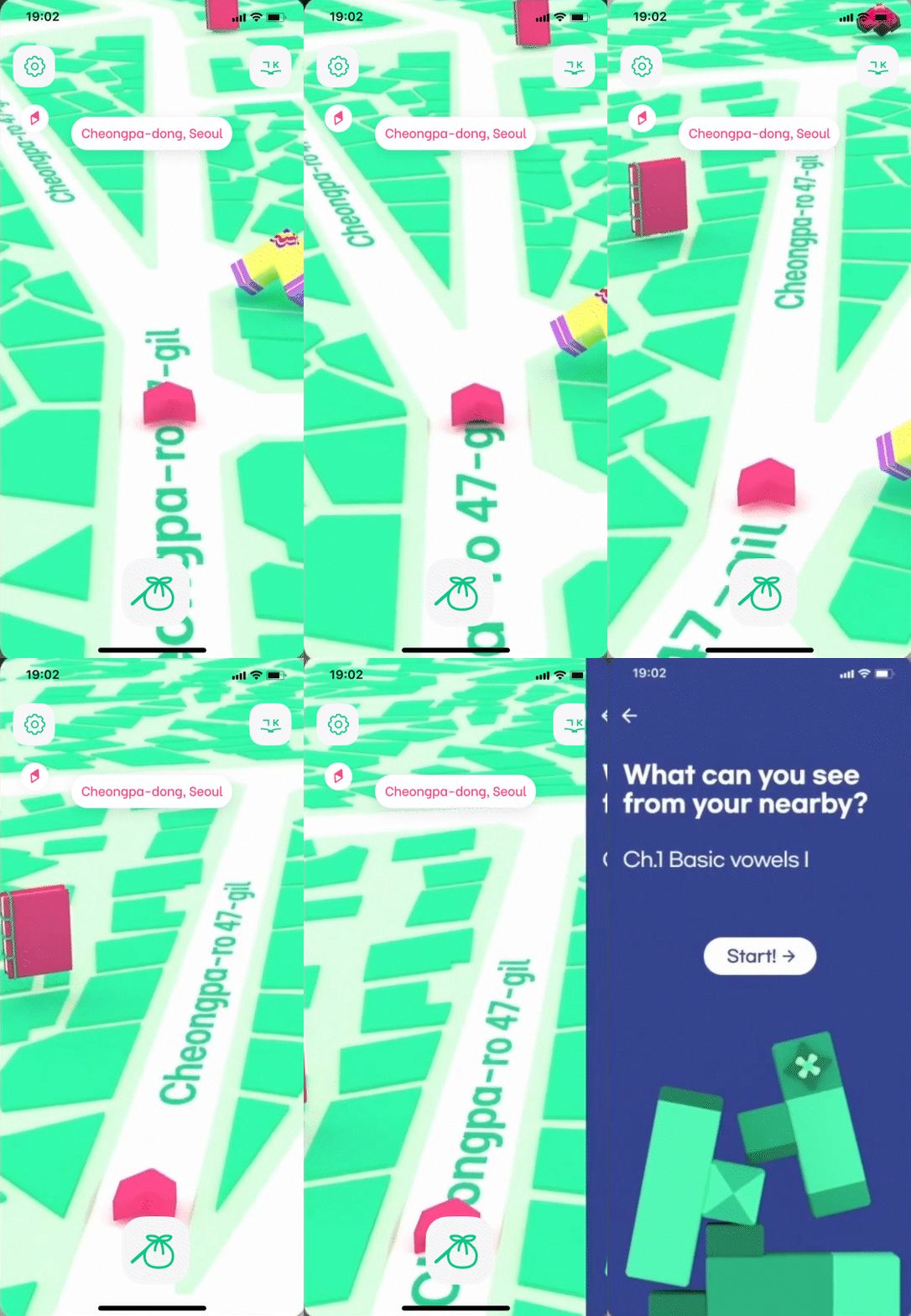
Explore map randomly and find a learning book!
When learners start KoLing, the first thing they see is their location on a 3D map, which shows the name of the area, the street, and nearby buildings.
Learning Through Games
Step 1. Learn Characters - Understand Principles
Learners understand Hangeul's formation principles through games designed to match each letter's characteristics.
Step 2. Listen and Repeat - Practice Pronunciation
Learners listen to pronunciations and practice speaking while seeing illustrated examples of how characters combine.
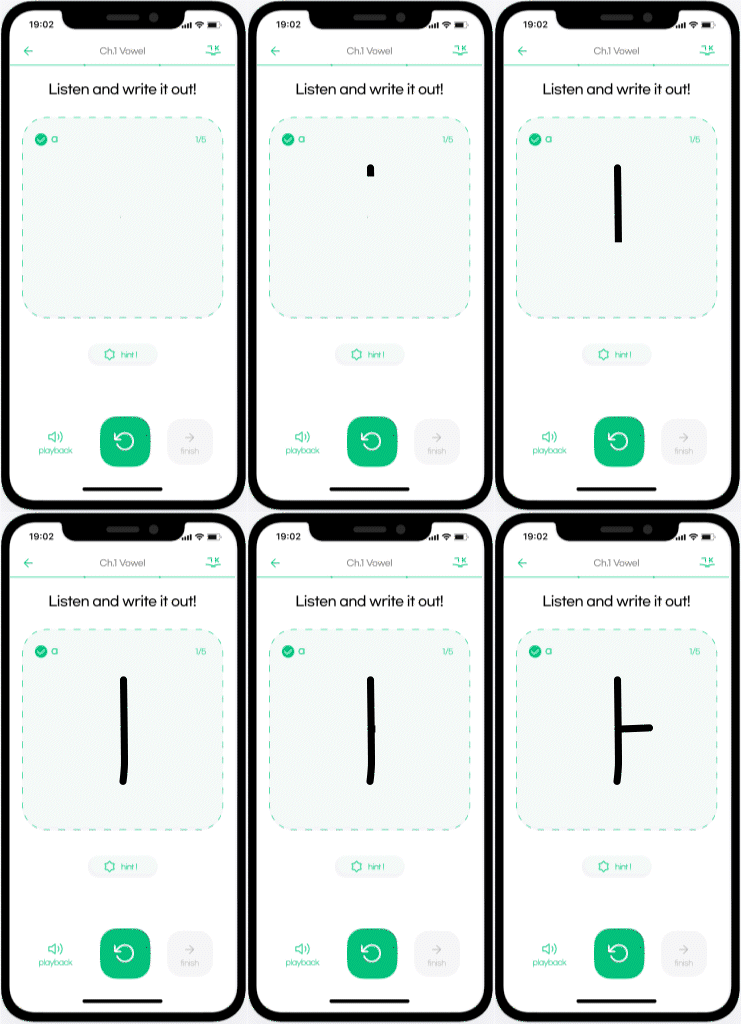
Step 3. Listen and Write - Apply Knowledge
Learners hear a pronunciation and write the corresponding characters. Hints are available if needed.
ADDITIONAL FEATURE
The Letter: Building a Global Learning Community through game
As learners discover pronunciation games along their route, they hear recordings from peers at different skill levels, leave their own voice, and earn rewards for contributing. This transforms solitary language study into shared cultural exchange where learners support each other's growth.
ONLINE USER TESTING
Test and Iterate
Task-based testing evaluated KoLing's usability and interface clarity.
Iterations:
Merged listening/speaking stages per user feedback; added separate writing stage
Changed from vertical scrolling to horizontal swiping to clearly differentiate learning stages
© 2026 RIWON KWON. All rights reserved.