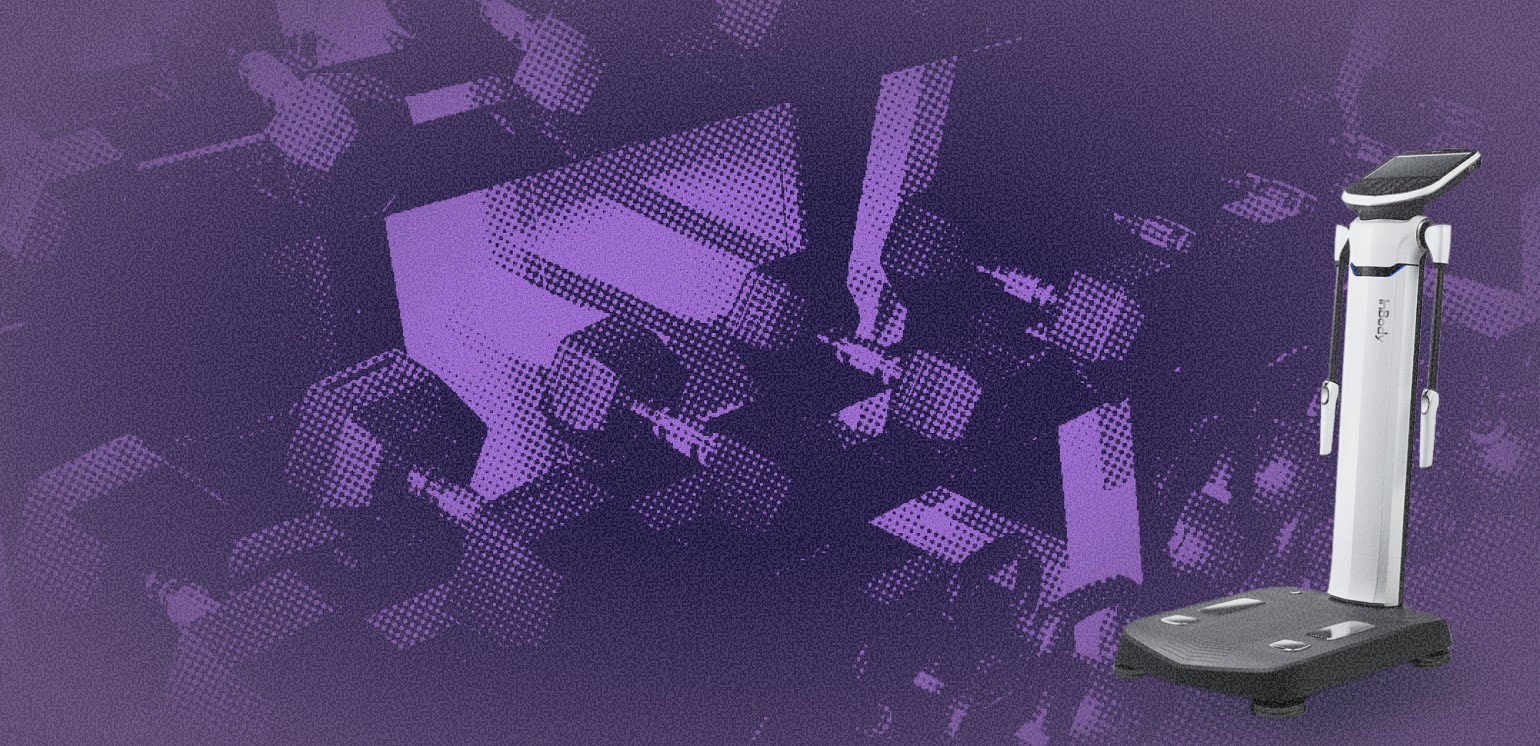

Turning Body Composition Data into Daily Training Actions for Trainers
WHY THIS MATTERS
MORE WAYS TO EXPLORE
ROLE
UX Design Lead (Intern)
UX Research
UI Design
Image Generation @gemini
Prototyping & Testing
TEAM
2 UX Design Interns 3 AI Engineer Interns 3 Engineers
DURATION
Nov 2023 - Jun 2024
CHALLENGE
Underutilized Body Composition Analyzers
InBody USA installed body composition analyzers in 30+ Southern California gyms, but adoption remained low.
While body composition analysis is common in South Korea, most US gym members were unfamiliar with InBody data and its value.
The Need for Automated Management
Based on operational insights, we found that group fitness challenges increased device usage when trainers actively helped members with the scanning process.
However, manual challenge management was a burden for trainers, creating the need for an automated solution.

Group fitness challenge?
A type of group training where members set shared goals, such as losing weight, compete with each other, and work toward achievement together.
RESEARCH
Understanding Operational Challenges
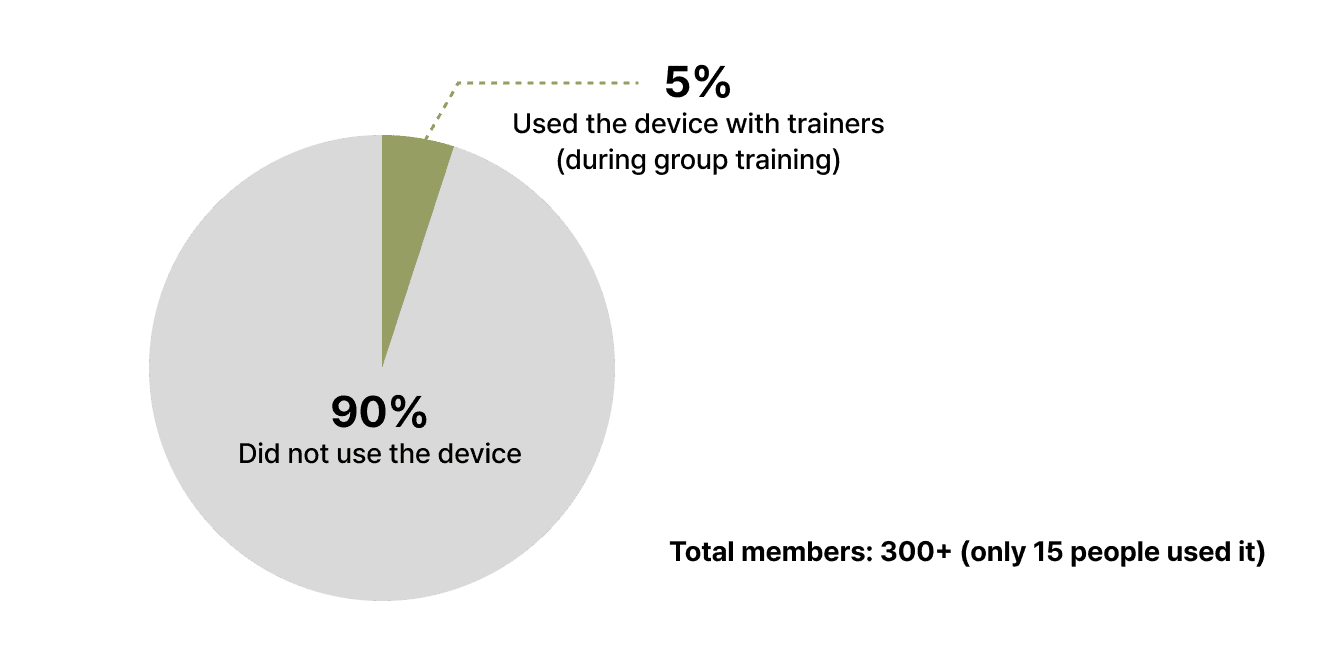
How many people use the device? How can we make trainers use our fitness challenges?
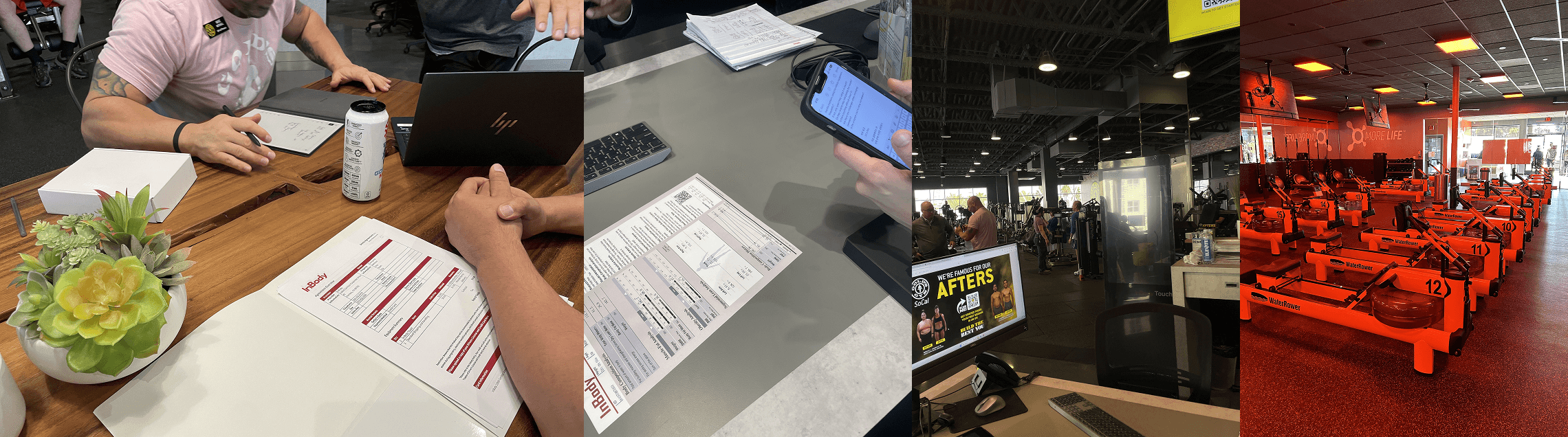
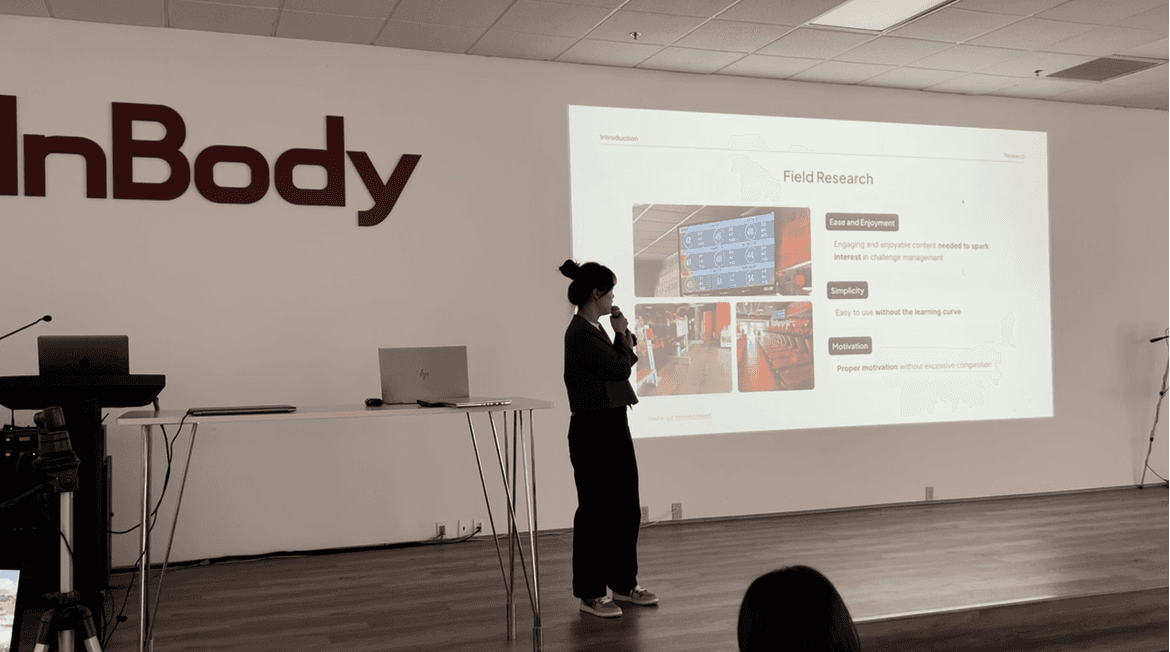
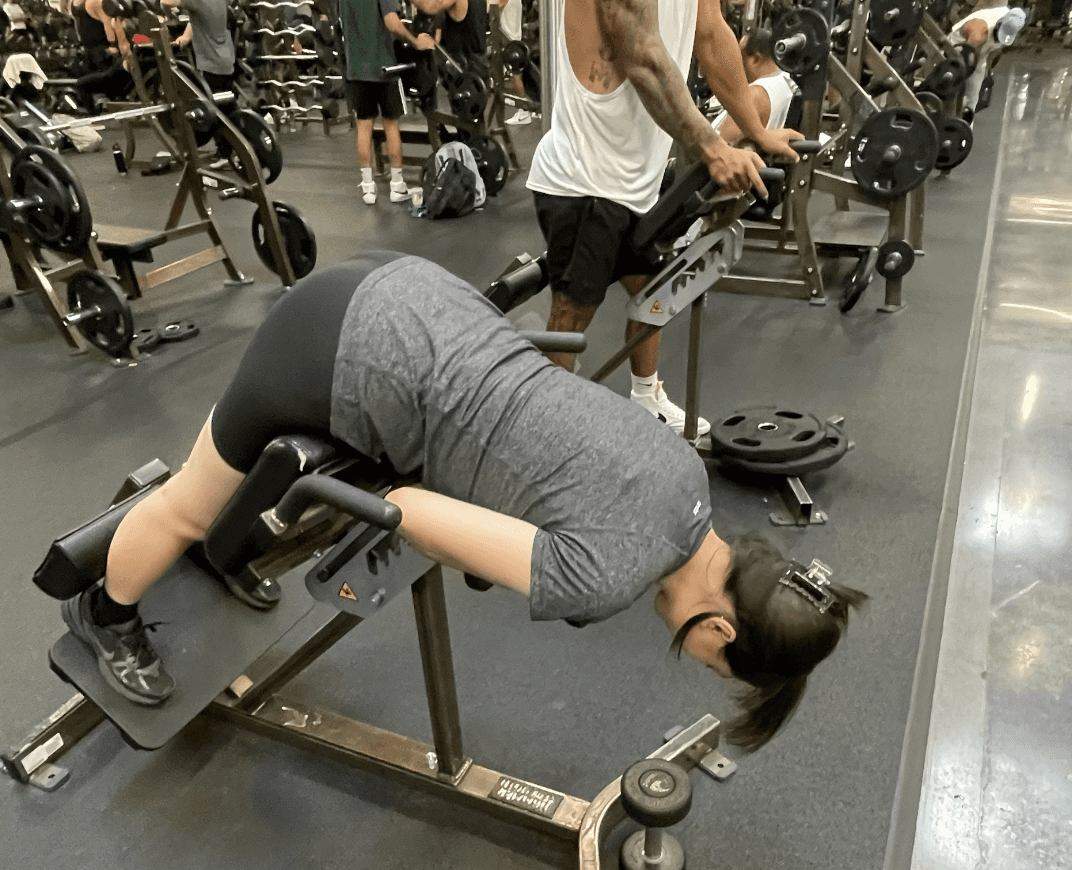
To uncover why devices went unused, we conducted comprehensive research across 6 gyms in SoCal during peak hours (6–8 p.m.), including a 3-month embedded study at Gold's Gym where we observed daily operations and interviewed 15 trainers.
Across all gyms, I was in the same space as more than 300 people in total, yet none of them used the devices, except for a few members who were training with personal trainers.
Through observations and interviews, I discovered that members wanted to use the devices but felt uncomfortable scanning themselves in front of others and couldn't interpret the numbers without guidance.
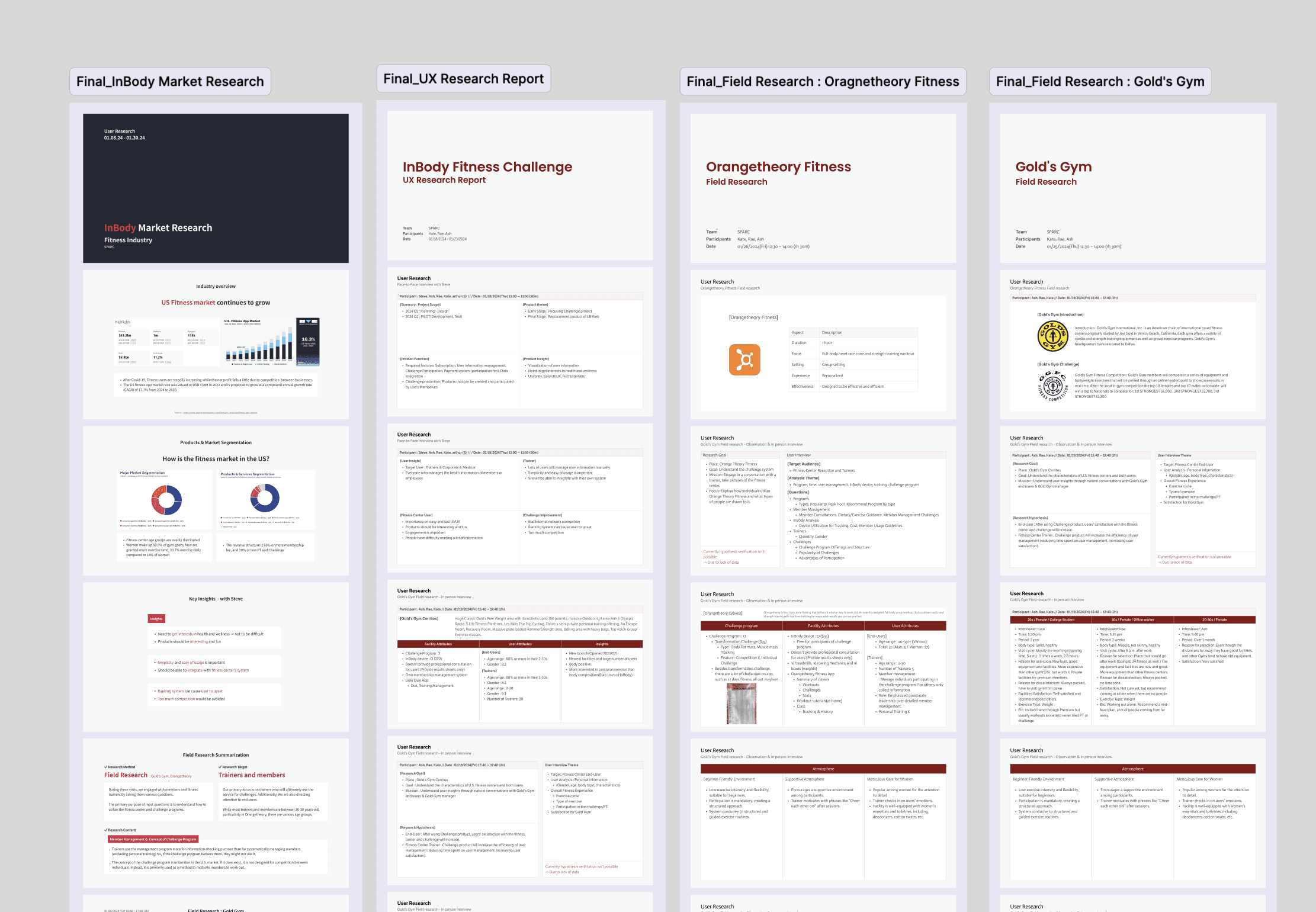
Market Research & Field Research Reports
Members struggled with device accessibility
Felt uncomfortable scanning themselves in front of others
Couldn't interpret body composition numbers without guidance
Trainers had pain points regarding fitness challenges
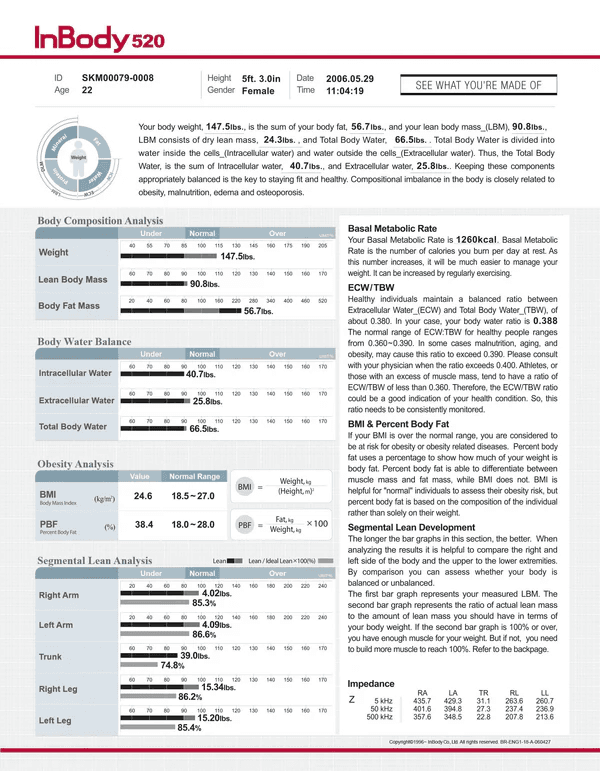
Member Accessibility Barrier
Members struggled to interpret the data without trainer guidance, creating dependency on already-busy trainers.
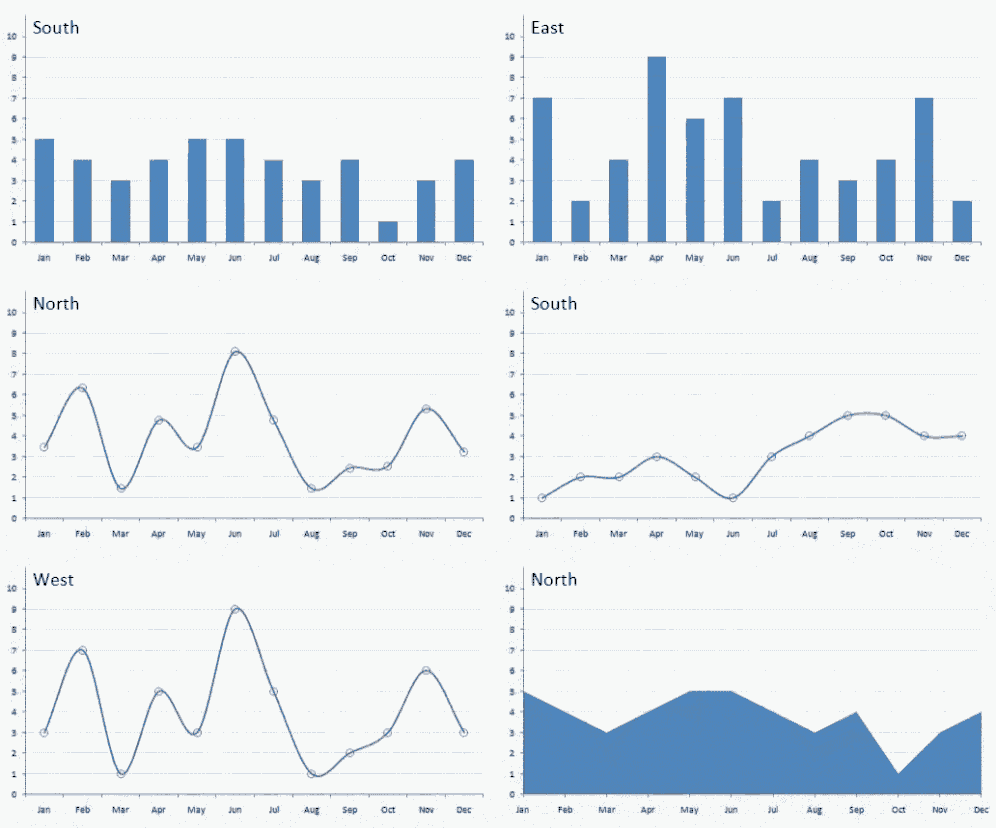
Time-consuming manual result management
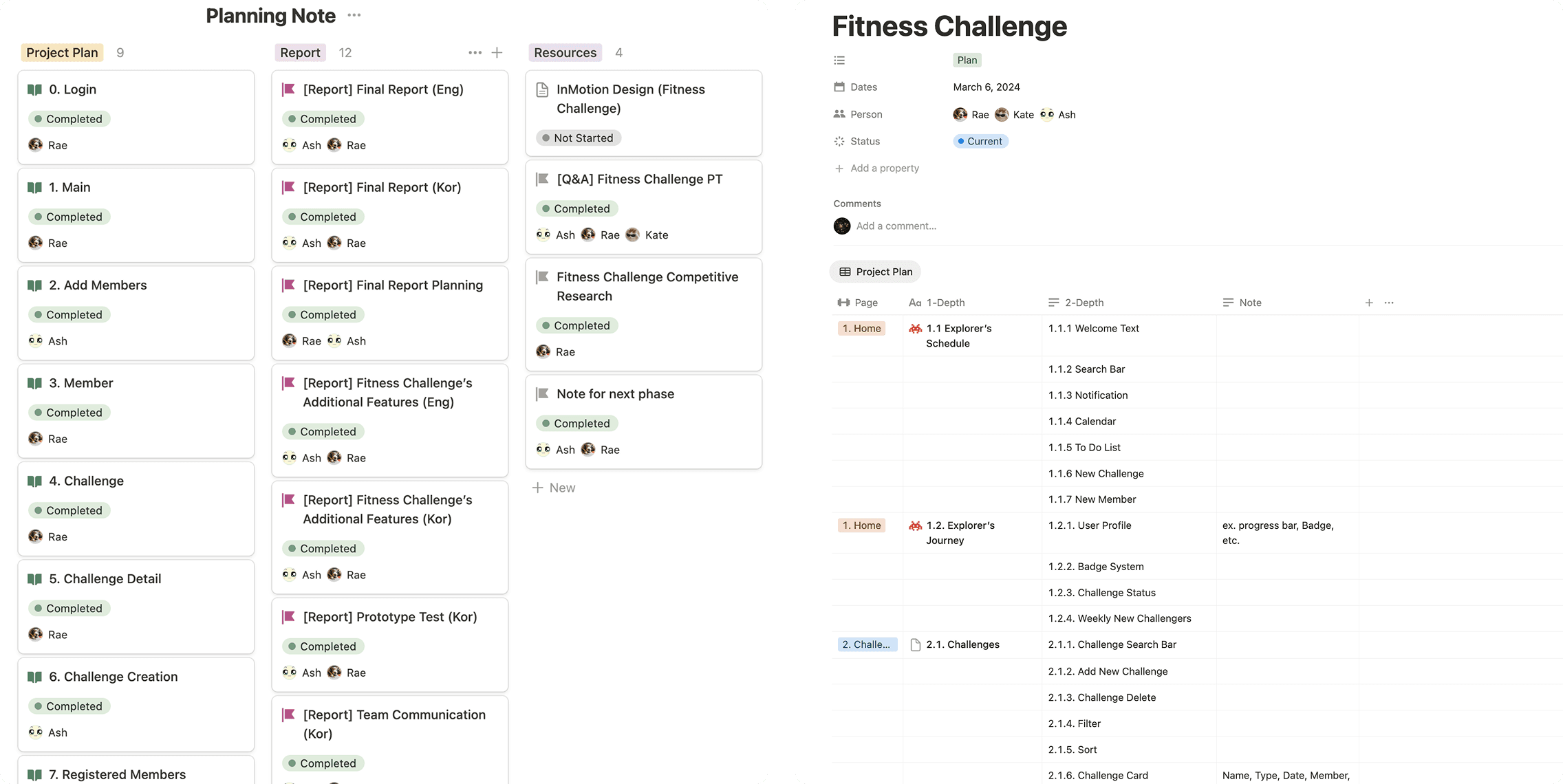
Recording results in Excel increased daily workload by approximately 30%.

Low Motivation
The operational challenges caused trainer engagement to drop, diminishing use of body composition data.
Despite these challenges, fitness challenges remained valuable because they naturally aligned body composition tracking with long-term behavior change if we could reduce operational friction while maintaining human guidance.
KEY INSIGHT
Adoption failed not from lack of user motivation, but because trainers bore all the operational burden without proportional rewards.
Research Question
"How might we integrate body composition insights into trainers’ natural workflow in a sustainable way, so that it feels like a benefit rather than a burden?"

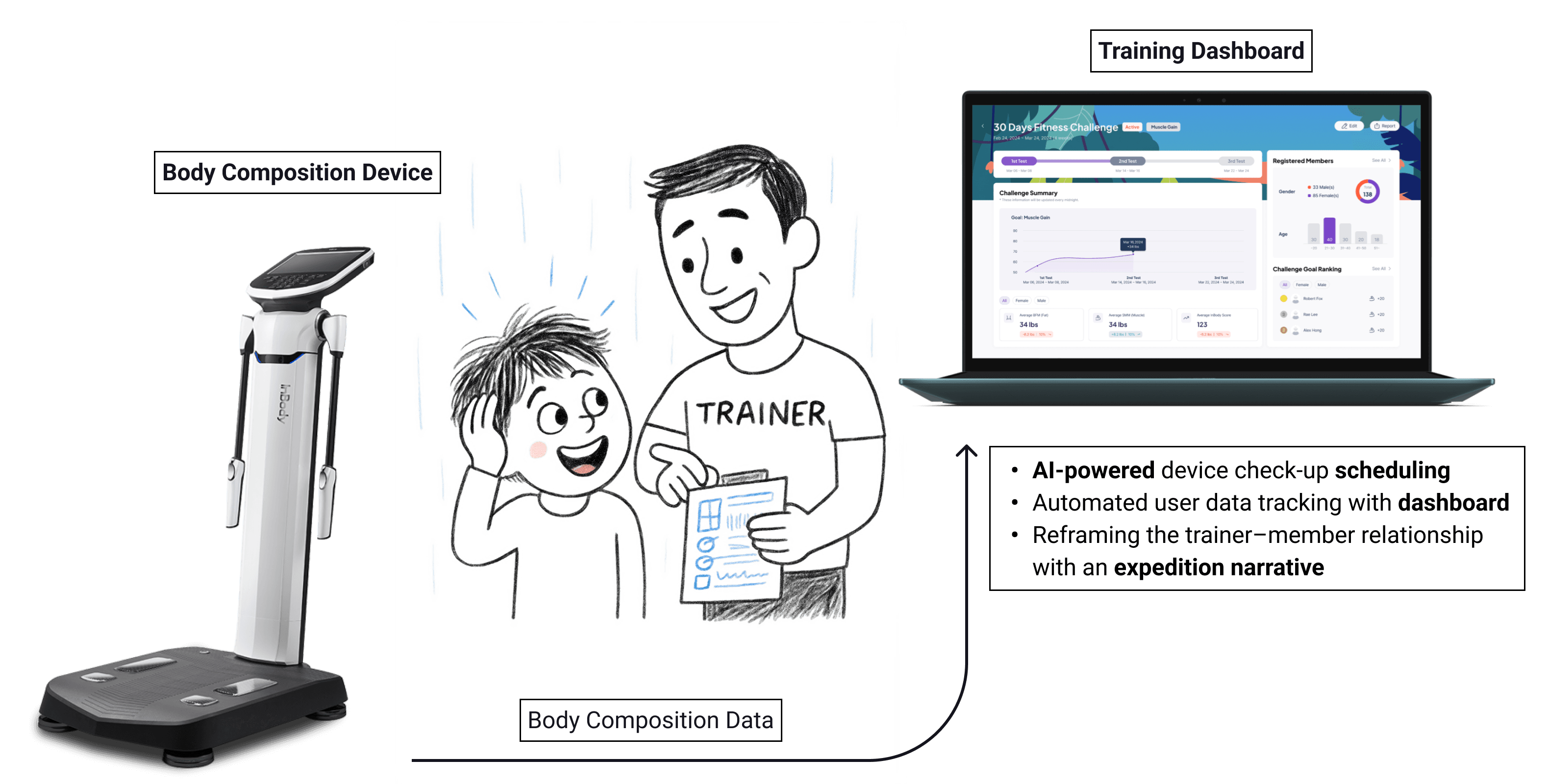
Generative AI challenge creator
Instead of manually filling out spreadsheets, trainers simply input a natural language prompt (e.g., "It's a 3-weeks challenge and I want to check-up twice a week").
The AI instantly generates a structured schedule and daily milestones based on the input, reducing a 5-minute task to just 20 seconds.
DESIGN
Gamification for Member Retention
The dashboard introduces a trainer ranking system, but the core metric isn't just activity, but it's impact.
By visualizing how active challenges correlate with higher Member Retention Rates, the system motivates trainers to use the device as a strategic tool to manage their clients and stabilize their income.
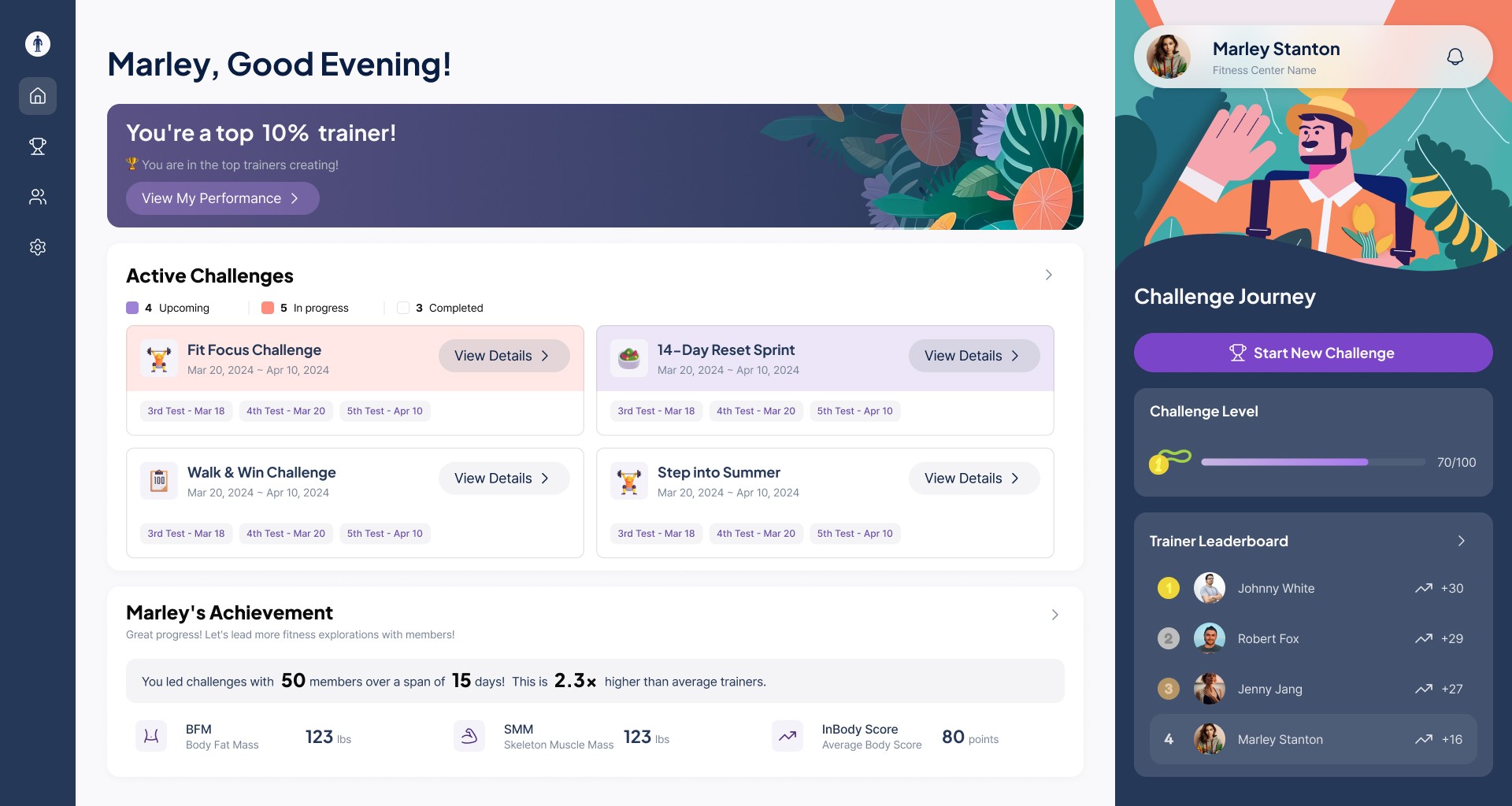
Real-time challenge progress tracking
Trainers can monitor member progress at a glance through key metrics: weight change, body fat %, and scan frequency.
This eliminates the need to manually check Excel sheets, saving 20+ minutes per week per trainer.

Enabling proactive coaching
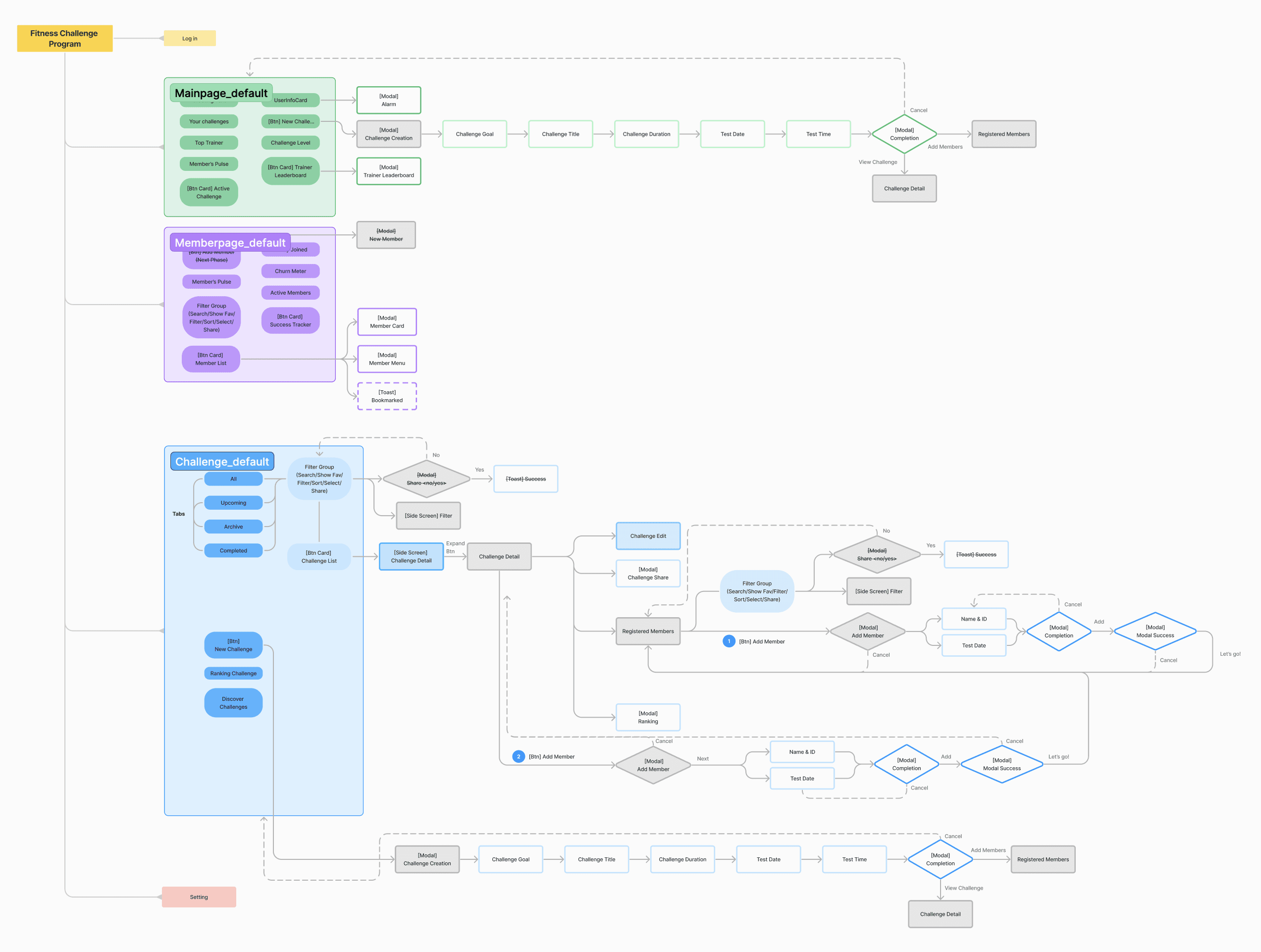
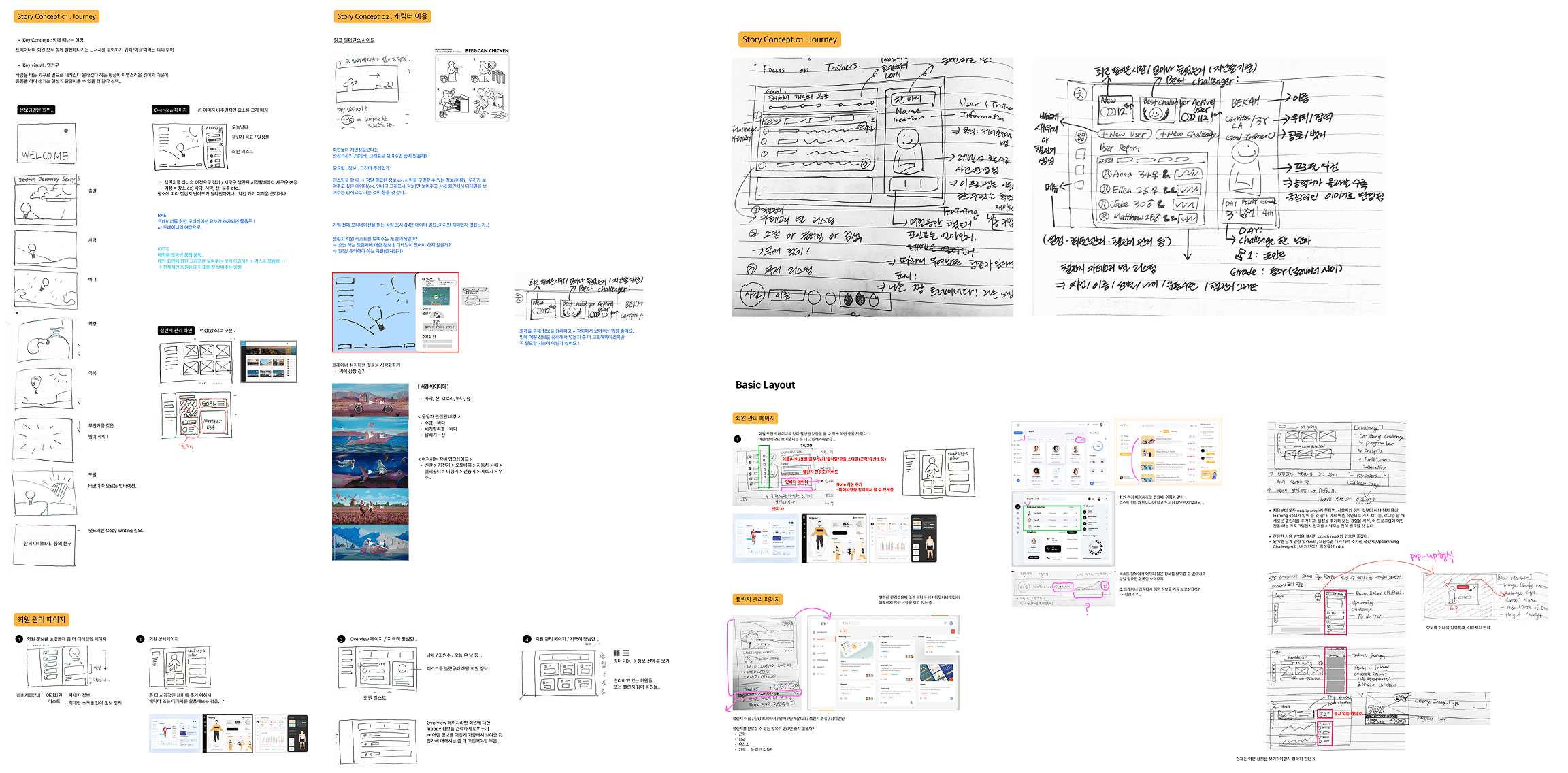
The core of the trainer's view is a dashboard that visualizes each member's progress. It integrates historical health data with live challenge performance, creating an environment where trainers can immediately identify and respond to a member's needs.


DESIGN SYSTEM
Building a sustainable and scalable design system
Led the development and implementation of a design system to ensure consistency across TV, kiosk, app, and web products.
Introduced a color-token system to standardize colors across platforms.
Proposed a clear and systematic naming convention for developers to reduce development time and improve workflow efficiency.
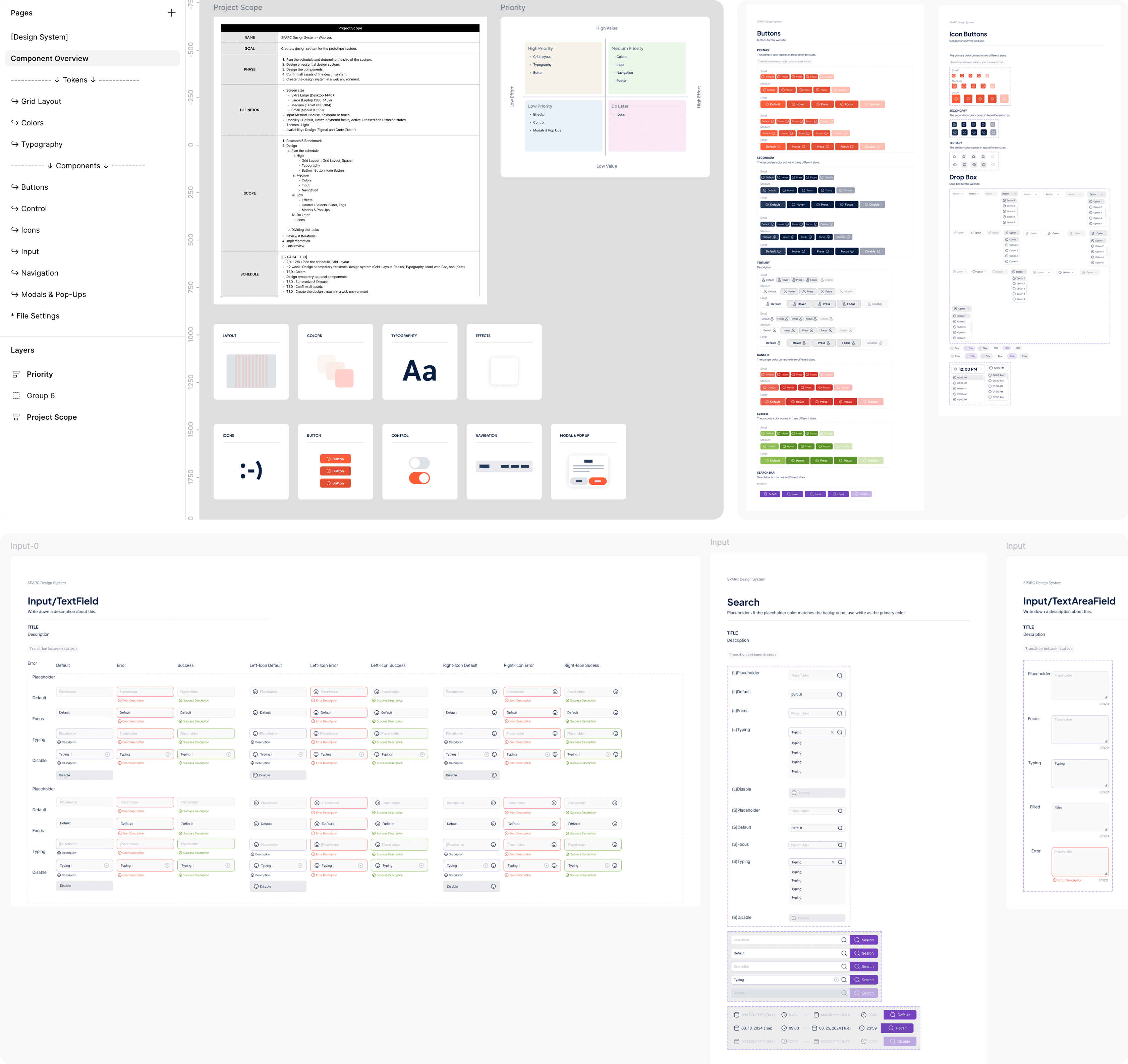
Universal Design System
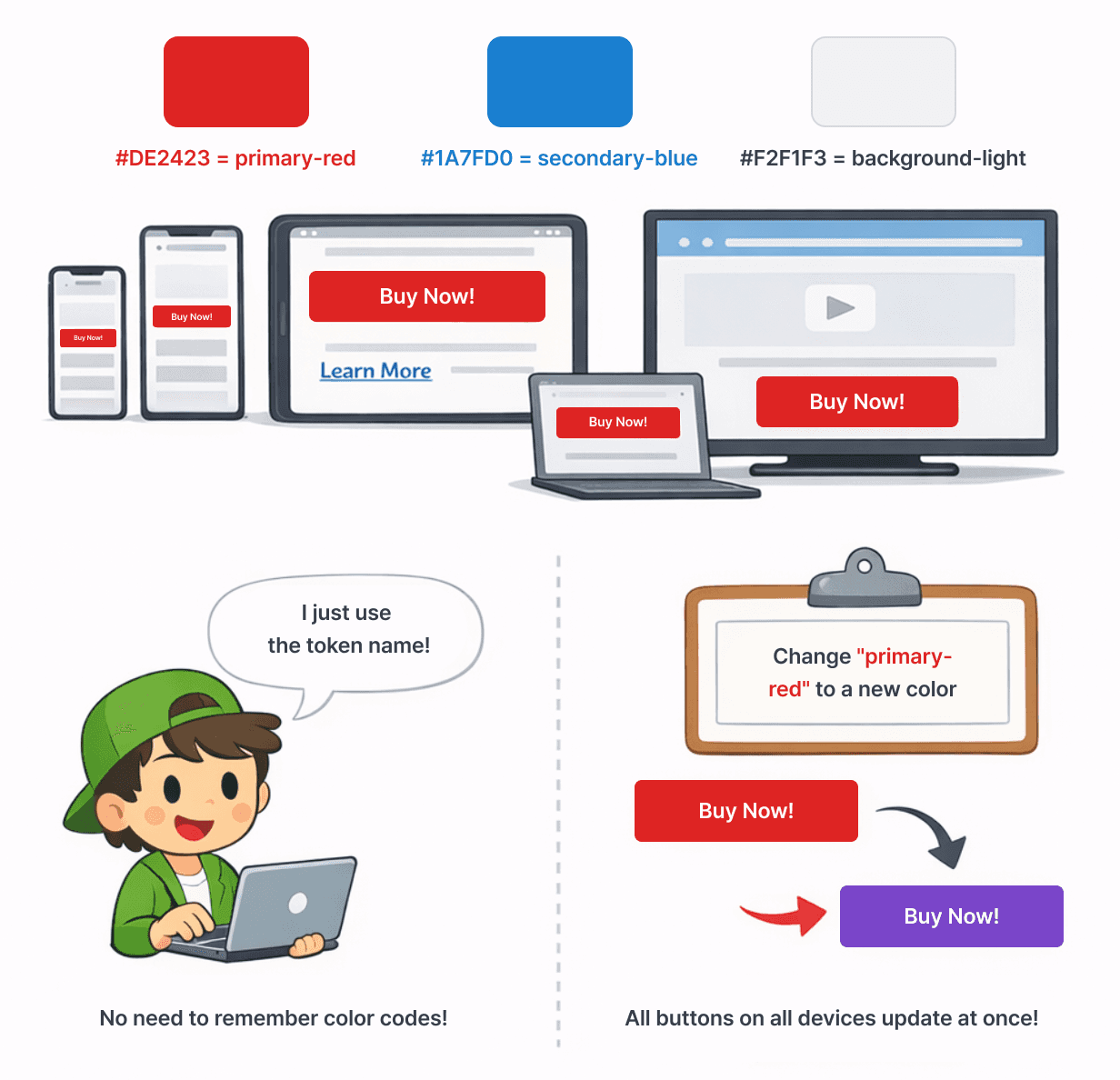
What is color token system?
USER TESTING
Test and Iterate
We iteratively conducted A/B design testing for 'user selection' feature and user testing with trainers to validate which feedback mechanisms most effectively increased trainer engagement.


© 2026 RIWON KWON. All rights reserved.